Are railway Level Crossings safer 20 years after Elsenham?
Twenty years after the death of Olivia Bazlinton and Charlotte Thompson, two friends, killed by a train at the dangerously configured Elsenham railway level crossing – and over a decade after a scandalous cover-up was exposed – has Network Rail reduced risks to pedestrians crossing rail tracks?
By Paul Coleman
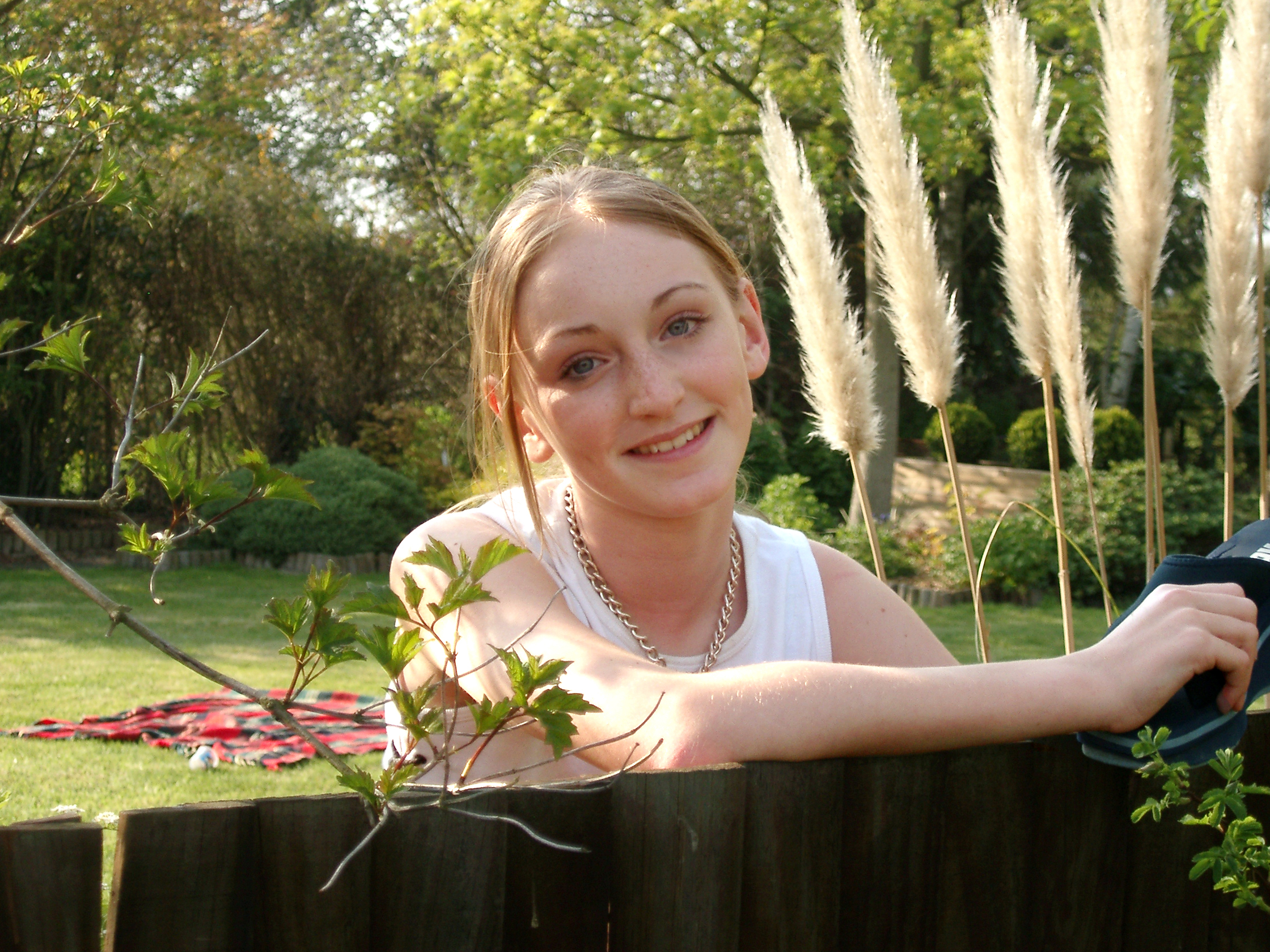
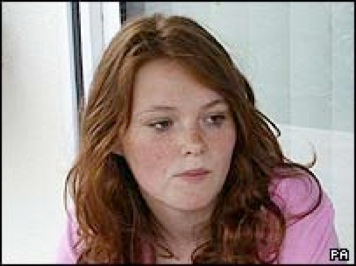
Olivia Bazlinton
*
Olivia Bazlinton and Charlotte Thompson were killed on 3 December 2005 – exactly twenty years ago – as they set off together from Elsenham for a Saturday morning Christmas shopping trip to Cambridge.
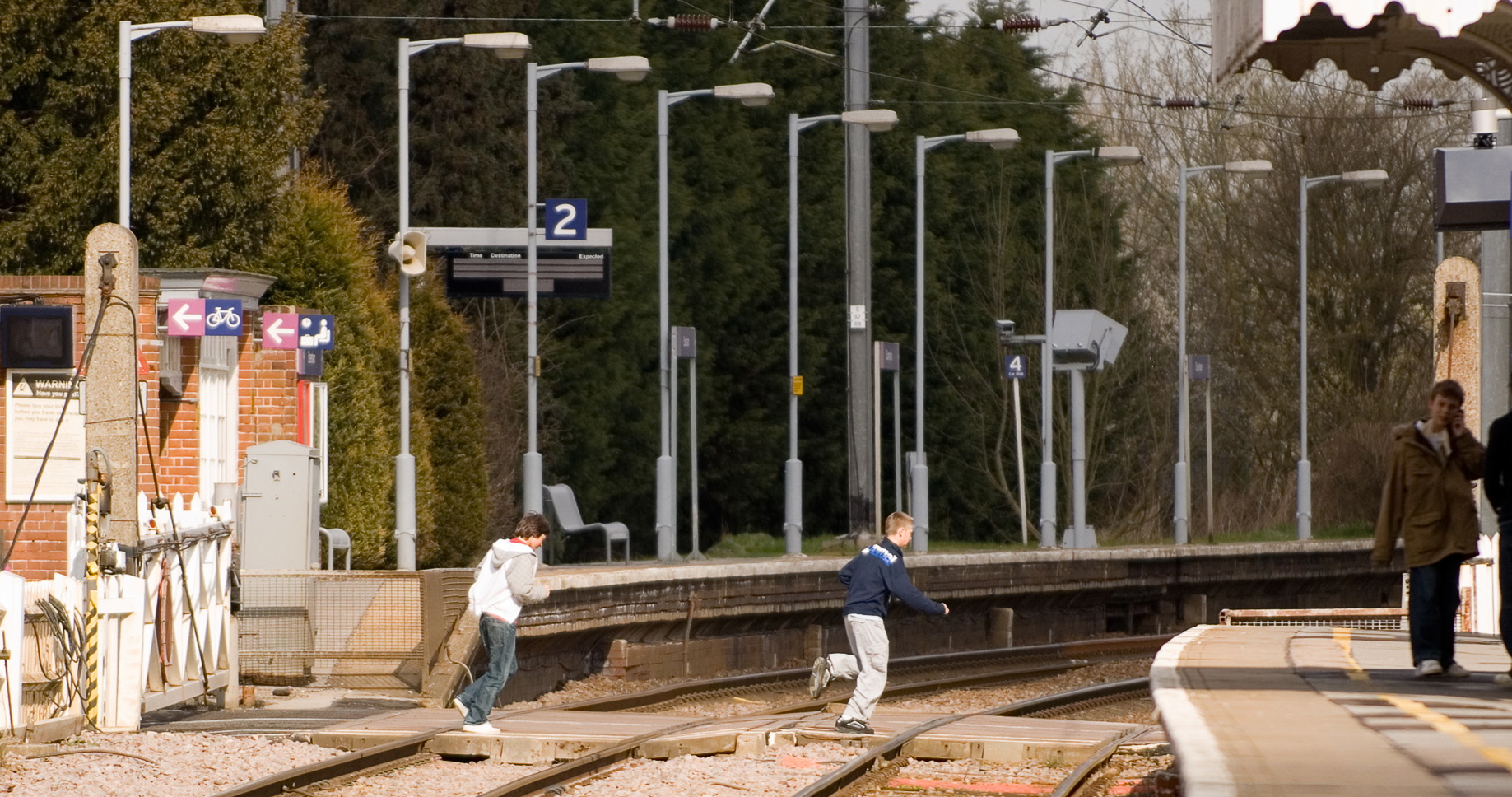
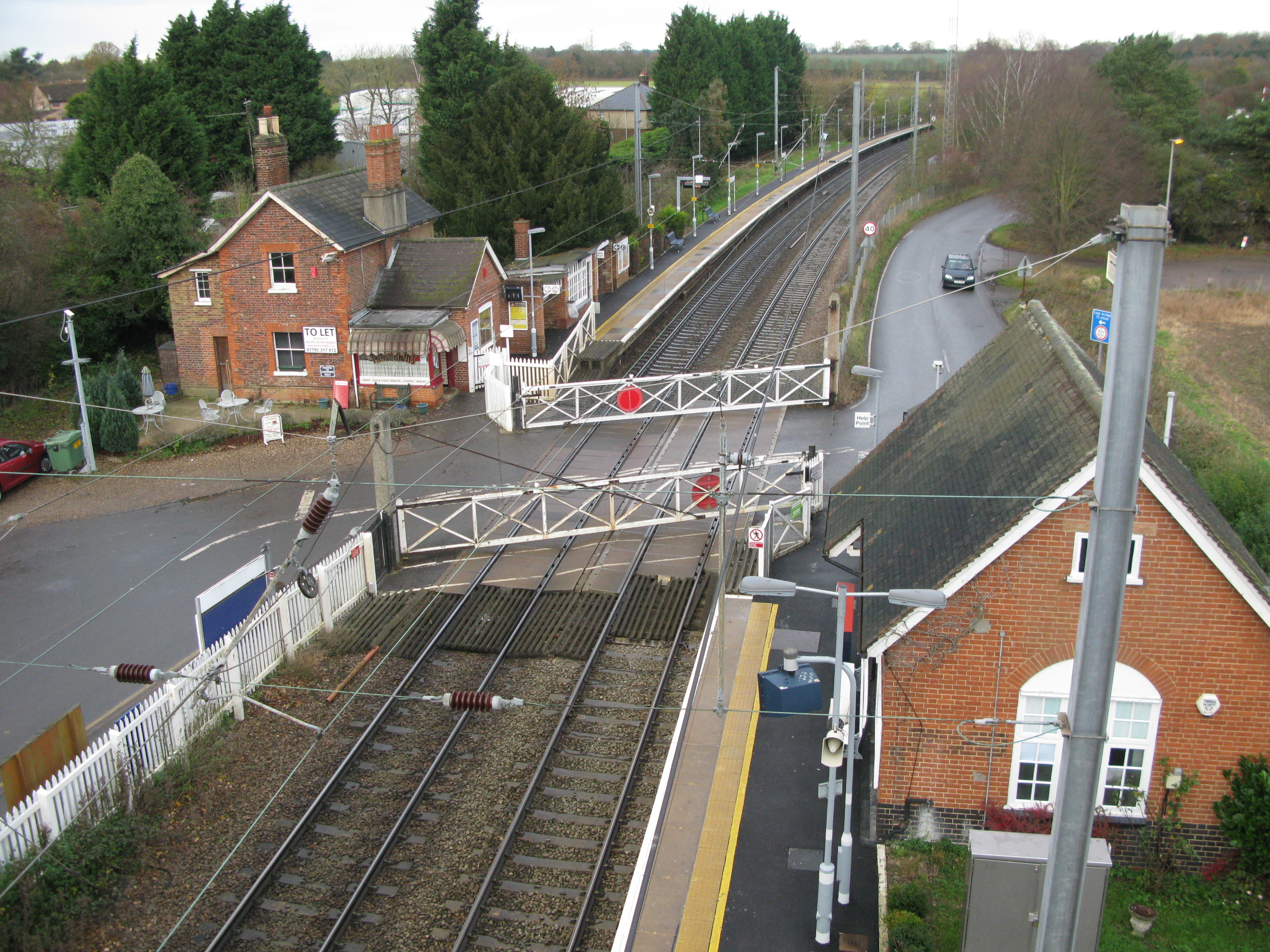
An express train hit both friends at a dangerously configured pedestrian footpath level crossing at Elsenham station in Essex.
Olivia, aged 14, and Charlotte, 13, were catching a train that had already cleared the crossing and was coming to a halt at the opposite platform. The dangerous layout and operation of the crossing meant they did not realise a second train – a non-stopping Stansted express – was also rapidly approaching Elsenham.
The horrific premature ending of their bright lives was tragic for their grief-stricken families. Hilary Thompson, Charlotte’s mother, says: “We are all lost without her.”
Olivia’s sister, Stephanie, says: “You will always be loved and never forgotten.”
Richard Priestly, their headteacher, recalls: “They were full of life and had everything ahead of them.”
*
The families’ intense grief mixes with anger as a scandalous cover-up is revealed over the next seven years.
Reg Thompson, Charlotte’s father, describes Elsenham station’s level crossing as “a bear trap in the woods”.
Chris Bazlinton, Olivia’s father, adamantly says Olivia and Charlotte would still be alive if the pedestrian crossing gates had locked – either manually or automatically in tandem with train signals that indicated an approaching second train. The gates had no locks or latches of any kind.
Chris Randall, then editor of Rail Professional magazine, concludes: “A simple lock, operated either manually or automatically when a train is approaching, would have almost certainly prevented the deaths of Olivia and Charlotte.”
Rail expert and historian Christian Wolmar adds: “I suspect there will be major changes at Elsenham, too late for the two girls.”
Similarly, Mr Bazlinton, is also sure the girls would still be alive if the level crossing had been equipped with a second, differently sounding alarm. This would have enabled the girls to distinguish between their 10.41 train halting at the Down platform and the approach of the rapidly approaching second train.
Many local people admit in the aftermath to having crossed the tracks when miniature warning lights flashed red. Thousands of local people sign a petition demanding Network Rail fit locking pedestrian gates. Initially, Network Rail’s leaders refuse to install a footbridge until persuaded by mounting pressure from the families of Olivia and Charlotte.
*
The families of the two girls attend a meeting before a January 2007 coroner’s inquest at Chelmsford. Network Rail solicitors persuade the Essex Coroner, Caroline Beasley-Murray, to exclude elements of risk assessments of Elsenham from the four-day inquest.
Excluded is a paper stating Network Rail’s risk assessments of April and December 2005 underestimated the risks at Elsenham – and that Network Rail did not ‘provide suitable and sufficient risk assessment’.
Ten members of the inquest jury visit the level crossing. Network Rail reportedly insist on a reduced line speed and require jury members wear hi-visibility tabards – an irony not lost on the families of Olivia and Charlotte.
Beasley-Murray later directs the inquest jury to reach a verdict of ‘accidental death’.
*
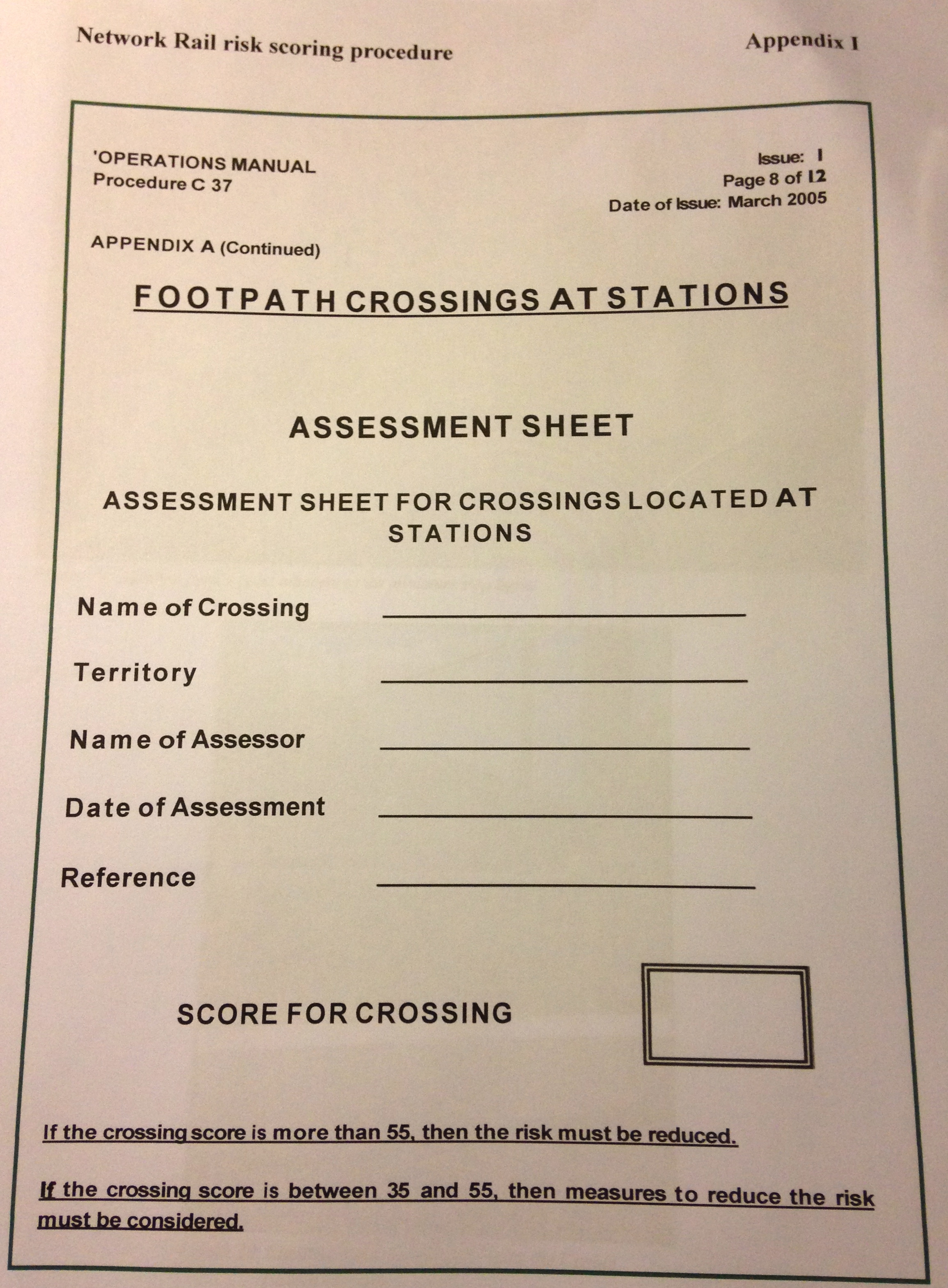
In 2005 health and safety law obliges Network Rail – the government-funded company responsible for UK railways – to manage risks at level crossings down to a level ‘as low as reasonably practicable’.
In April 2005, Network Rail staff had carried out a risk assessment of Elsenham’s footpath level crossing that deemed no safety improvements were needed.
Just two days after the 3 December tragedy Network Rail officials reassess risks at Elsenham. They acknowledge it has the third highest risks of any station pedestrian level crossing in the UK. The families of Olivia and Charlotte point to the gaping discrepancy between Network Rail’s April and December risk assessments.
Despite growing recognition of emerging flaws in Network Rail’s assessments, the company persists with a mantra that Elsenham is safe, if used correctly. Network Rail continues to say a footbridge would be unjustified and too expensive.
However, Network Rail begins to backtrack. In September 2006, the company states it will install pedestrian gates that lock automatically at Elsenham – and a £2 million footbridge will be installed. However, it sticks to its mantra that these will make an already safe crossing even safer.
Cambridge-bound passengers from Elsenham village, like Olivia and Charlotte, needed to use the crossing to buy a ticket from the Up-Line platform ticket office or machine. Then they needed to use the footpath crossing again to cross the tracks to catch their train from the Down-line platform which had no ticket office nor machine.
Passengers joining a train without a ticket risked being charged a £20 penalty on top of the actual ticket fare.
In December 2006, a year later, a ticket machine is installed on the Down platform.
*
In late 2008, members of Olivia and Charlotte’s families launch a civil action to prove Network Rail’s negligence.
In November 2010, almost five years after Elsenham, Network Rail does not submit evidence to defend itself against the civil cases. Network Rail agrees an out-of-court settlement.
Network Rail reportedly ‘demands 20% of the blame is attributed to the girls’, meaning the families face a 10% reduction for ‘contributory negligence’. The maximum settlement payable for such a fatality is £10,000 plus funeral expenses.
*
The rail safety scandal at Elsenham begins to break in early 2011. Two documents are whistleblown, documents hitherto unseen by the coroner or investigators.
The first document to ‘surface’ is an Elsenham risk assessment, prepared by Trevor Hill for Railtrack, (Network Rail’s predecessor) in May 2002 – over three and a half years before the December 2005 disaster. In Part B, Hill suggests that locking the pedestrian gates at Elsenham ought to be considered.
Part B was not mentioned at the Coroner’s inquest. It was neither seen by independent rail accident investigators nor by the girls’ families.
The families say Network Rail could have acted on Hill’s recommendation in 2002 to install locking gates that would have prevented their daughters from stepping onto the crossing.
“We were absolutely furious,” recalls Chris Bazlinton. “Network Rail should’ve given the coroner and the Rail Accident Investigation Board the whole document.”
The company denied withholding the risk assessment, including Part B. Trevor Hill did not give evidence at the coroner’s inquest.
Following the emergence of the document, the Office of Rail Regulation reopens its previously closed investigation.
*
Then a cover-up over the Elsenham disaster is fully blown. The Times, in 2011, exclusively reveals that Network Rail had ‘distributed’ the May 2002 risk assessment but had ‘withheld’ Part B.
In March 2011, another document emerges in which John Hudd, a Level Crossings Manager, predicts fatalities at Elsenham in a memorandum he wrote on 4 May 2001 – over four and a half years before Olivia and Charlotte were killed.
‘The sighting to trains…is very poor and the risk of disaster is real,’ writes Hudd.
*
“I felt absolutely sick when I read the Hudd memo,” recalls Chris Bazlinton, Olivia’s father.
“I fell into my chair and could not speak for half an hour,” says Tina Hughes, Olivia’s mother. “I was appalled. Those bastards knew. They just knew.”
*
In November 2011, the ORR announces it will bring criminal proceedings against Network Rail for serious breaches of health and safety law that led to the deaths of Olivia and Charlotte.
Seven years after Elsenham, on 31 January 2012, at Basildon Crown Court, Network Rail plead guilty to these breaches.
Reg Thompson, Charlotte’s father, reacts: “Network Rail knew that Elsenham was a death trap…and yet the company was happy to blame the deaths on the girls’ own actions.”
On 15 March 2012, Network Rail is sentenced at Chelmsford Crown Court.
Judge David Turner QC fines Network Rail £1 million.
To put that fine in perspective, the company’s debt at this time is around £30 billion.
*
Afterwards, the families of the girls demand to know how high the cover-up over the Elsenham risk assessments went within Network Rail.
Reg Thompson says afterwards: ‘Charlie and Livvie would be alive today if Network Rail had put proper safety in place at Elsenham. The people who are responsible for what happened to Liv and Charlie probably still sleep at night. That’s the way of the world.”
In November 2013, Robin Gisby, a Network Rail managing director, tells Members of Parliament that Elsenham was a “fundamental watershed” for the company. “The state our company was in over the risk assessment, and, to be honest, the subsequent behaviour of the company towards the families involved, were quite appalling,” says Gisby.
Nobody from Network Rail has ever been held legally accountable for the failures or deceits over Elsenham. The ‘fundamental watershed’ for Network Rail, according to Tina Hughes, Olivia’s mother, was the moment its concealment of its deficient and deceitful risk assessments were revealed.
*
But, since then, has Network Rail been sufficiently chastened by the revelation of the Elsenham cover-up to reduce risks at its level crossings? Tina Hughes has continuously cajoled Network Rail to intensify its safety measures at level crossings.
Hughes says Network Rail’s safety public awareness campaigns and its own organisational and cultural changes have significantly reduced the risk and occurrence of accidental deaths at crossings.
But she remains bitterly frustrated at Network Rail’s “woefully inadequate” lack of progress at introducing fresher protections with newer technologies now available.
*
In 2005, Network Rail managed 7,000 level crossings across the UK’s rail network. Between 2009 and 2013, it closes over 700.
Elsewhere, footbridges, signal locked pedestrian gates, two-tone audible warnings, and ‘second train coming’ voice warnings are installed.
Network Rail introduces new Level Crossing Managers responsible for identifying and mitigating risks.
There were five fatalities at level crossings during 2024-25, according to the Rail Safety Standards Board. Network Rail recently reported there have been 1,574 near misses at level crossings since 2021.
*
But Elsenham 2005 has several postscripts.
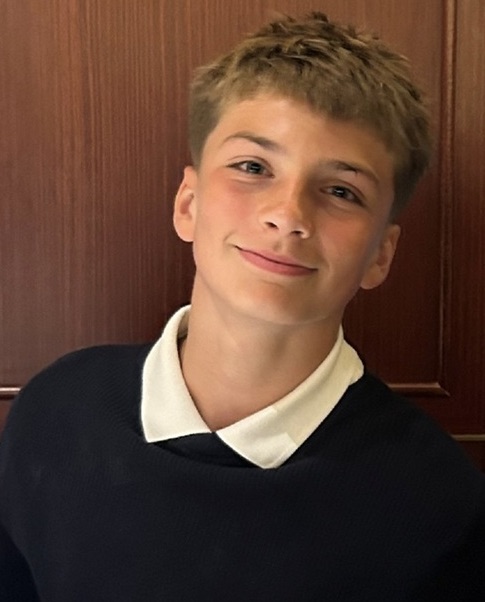
At around 19:05 on Wednesday, 26 November 2025, a train travelling at about 60mph (97kph) struck and fatally injured Josh Travis, aged 14, (pictured below), while crossing the Chestnut Grove footpath level crossing in Nottinghamshire.
*
*
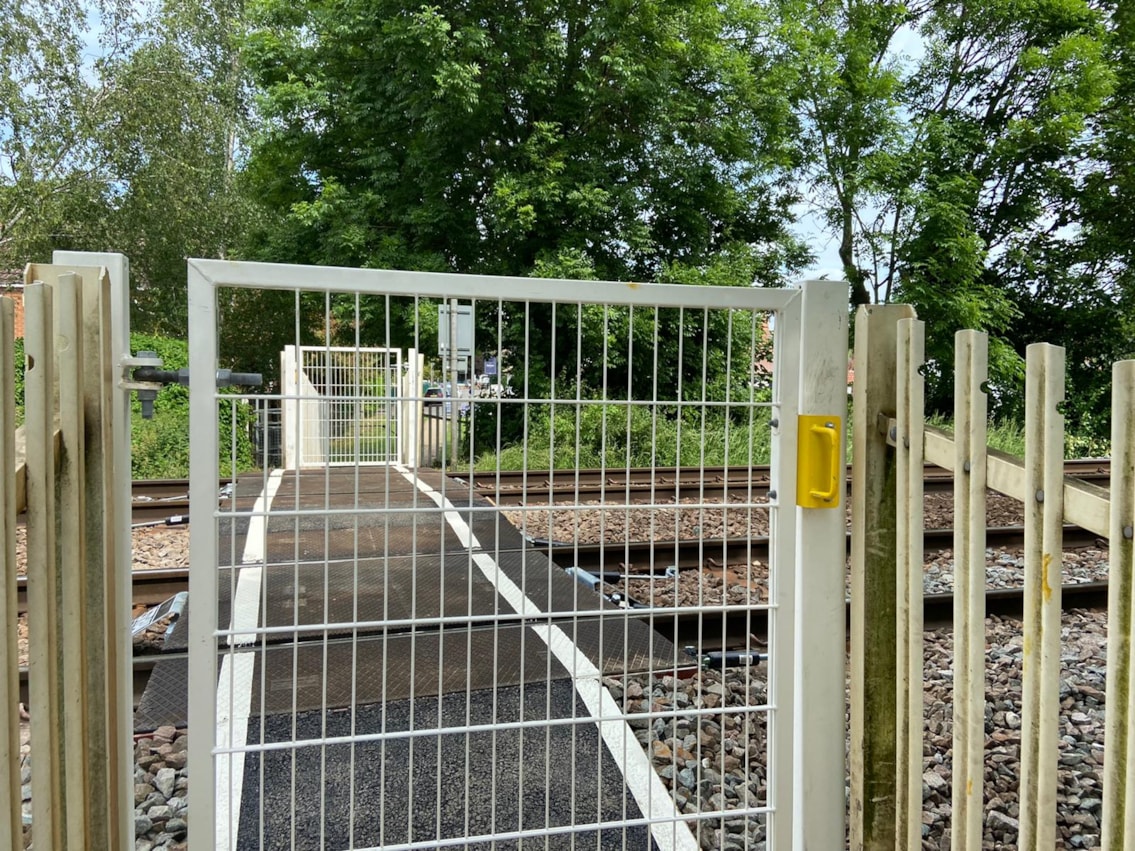
The footpath crossing, situated between Lowdham and Burton Joyce stations on the Nottingham-Lincoln line, allows pedestrians to cross between Burton Joyce and footpaths leading to the River Trent. The crossing, according to the Rail Accident Investigation Branch, has gates and signage on either side of the railway to instruct pedestrians how to cross. The RAIB is investigating, including the management of risk at the crossing by Network Rail and Nottinghamshire County Council.
Following the death of Josh Travis, Network Rail requested Nottinghamshire temporarily close the crossing as an emergency. This temporary closure was later extended. A traffic order regulation for the crossing lasts until 26 May 2026.
According to media reports, Nottinghamshire County Council had launched a consultation on the permanent closure on safety grounds of Chestnut Grove on 20 November 2025 – just six days before Josh Travis was killed.
Network Rail says it had reported 19 ‘near misses’ at the crossing between 2020 and March 2025, stating Chestnut Grove posed a ‘very real risk of serious incident’; and that it had applied to Nottinghamshire County Council to close the crossing on safety grounds in March 2025.
After Josh Travis’ death, his family stated: ‘Josh was a lad with an incredible energy for life, an infectious and mischievous smile, kind sparkling eyes, and so much love to give.’
**
*
A second Elsenham postscript involves Lucy Ruck, then aged 17, who lost her leg when hit by a second express train at Farnborough North level crossing in 1992.
Local residents for years demanded a footbridge be installed. A footbridge finally replaced the level crossing – in March 2025.
*
Another postscript is the current Labour government establishing Great British Railways (GBR) to nationalise and publicly own and manage the UK’s passenger services and rail infrastructure. Network Rail will be ‘consolidated’ into the wider GBR.
During Britain’s original nationalisation, under Prime Minister Clement Atlee’s post-World War II Labour government, many private industry officials simply transferred to the newly nationalised industries.
Will Network Rail’s ex-officials hop aboard GBR? Will they stymie real change, especially on issues like rail safety, including at level crossings?
*
One further bitter twist upsets Tina Hughes and Chris Bazlinton and their family and friends. They visit Elsenham station to mark the twentieth anniversary.
To their dismay, they see that the locking pedestrian gates at Elsenham are still out of use after a six month failure of the locking mechanism.
Network Rail is due to fix the gates.
But, even with the footbridge in place, the risk to pedestrian users of Elsenham’s footpath level crossing has risen again.
The families feel this bitter irony, occurring as it does in the same period as the twentieth anniversary of what happened to cruelly cut short the precious lives of Olivia and Charlotte.
Notes:
The Rail Accident Investigation Branch is independent of the rail industry, including the Rail Safety and Standards Board which regulates safety and standards at level crossings and conducts research. Network Rail owns and manages risk on the rail network of England, Scotland, and Wales, including at most level crossings.
For full story, visit Focus: https://www.londonintelligence.co.uk/level-crossing-safety-2/
© Paul Coleman, London Intelligence, December 2025.